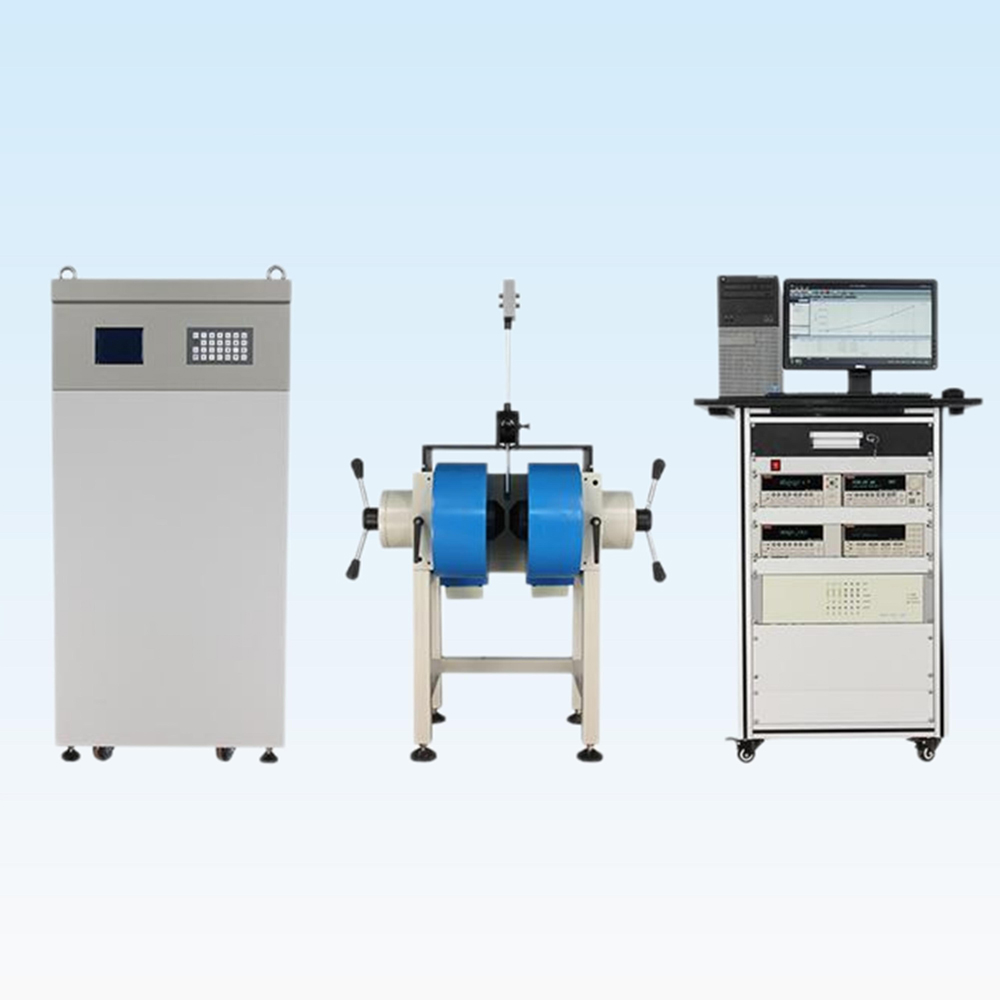
CMT-3000 Hall Effect Characterization Device
CMT - 3000 is an automated system integrating Hall effect, magnetoresistance, and I - V curve testing for advanced semiconductor material characterization.
CONTACT US1. Product Overview
The CMT-60 Compact Hall Effect Measurement Instrument integrates precision hardware and smart software to provide reliable analysis of semiconductor materials. It measures key parameters such as resistivity, Hall coefficient, carrier mobility, and carrier concentration, offering a complete platform for material research and device characterization.
This system considers details often overlooked, such as electrical instrument configuration and circuit wiring (both at room and low temperatures). With advanced design and a user-friendly interface, the CMT-60 enables quick setup and highly accurate results.
2. Key Features
- Plug-in sample cards for fast installation and replacement
- Standard configuration allows two samples to be tested simultaneously; expandable to four with optional devices
- Broad resistance measurement range: 0.1 mΩ – 100 GΩ
- Multiple Hall and resistance measurements under various currents and magnetic fields
- Automated data collection and curve plotting (I-V, R-T, R-H, magnetoresistance)
- Stable magnetic field with zero-field smoothing capability
- Built-in precision Gauss meter in the electromagnet power supply for fast field control
- Flexible low-temperature options, enabling Hall effect and resistance measurements at variable temperatures
3. Testable Samples & Applications
Typical Materials
- Semiconductors: Si, GaAs, InAs, InP, SiGe, InGaAs, AlGaAs, HgCdTe, etc.
- Low-impedance materials: metals, transparent oxides, weak magnetic semiconductors, TMR materials.
- High-impedance materials: semi-insulating GaAs, GaN, CdTe, etc.
4. System Configuration
Main Configuration (U.S. Keithley Equipment)

Magnetic Parts

Low Temperature Portion (Optional)
| Temperature Range | Cooling body | Temperature control device |
| 80~500K | Liquid nitrogen thermostat | TC202 |
| 4~500K | Cycle refrigerator | TC202 |
| 4~325K | Cryogenic low temperature system | TC202 |
| 45~325K | CTI small refrigerator | TC202 |
5. Software Functions
The dedicated software supports:
- Automatic measurement of Hall effect, resistivity, and magnetoresistance
- Real-time calculation of sheet resistance, Hall coefficient, conductivity type, carrier concentration, and mobility
- Curve plotting: I-V, R-T, R-H, and magnetoresistance results are displayed immediately
- Data export and automated reporting
6. Software Functions
The dedicated software supports:
- Automatic measurement of Hall effect, resistivity, and magnetoresistance
- Real-time calculation of sheet resistance, Hall coefficient, conductivity type, carrier concentration, and mobility
- Curve plotting: I-V, R-T, R-H, and magnetoresistance results are displayed immediately
- Data export and automated reporting
7. Additional Technical Modules
Magnetic Field Environment

Temperature Environment (Optional)
No liquid helium superconducting magnet system, 1.6K~325K;
Liquid nitrogen thermostat options:
- Standard liquid nitrogen thermostat, 80K~325K;
- High temperature liquid nitregen thermostat, 80K~500K;
Cycle refrigerator options:
- Standard 4K refrigerator system, 4K~325K;
- High temperature 4K refrigerator, 4K~700K;
- Standard 10K refrigerator system, 10K~325K;
- High temperature 10K refrigerator, 10K~800K;
- Minisize refrigerator system, 45K~325K.
Main Technical Indexes
- Sample Size Small: 12 × 12 mm² Large: 50 × 50 mm² Probe: 1 × 1 mm² ~ 30 × 30 mm²
- Sample Measurement Methods Hall effect samples: Si, GaAs, etc. Resistance & I-V samples: 4-wire or 6-wire method
Electrical Properties
Under the following typical test conditions:
- Sample power consumption less than 1mV, under this condition, let excitation reach the maximum recommended current and voltage in system configuration;
- Sample temperature 295K;
- Sample seat without leak current;
- The resistance of each test lead 25Ω;
- Voltage usage effectiveness of measurement electrical resistivity (V_out/V_in) should be 0.1 approx. for the Vanderbilt sample and should be 0.5 approx. for hall sample;
- Sample shape correction factor 1;
- Magnetic field and sample thickness measurement uncertainty should be within 1%;
- Magnetic field/sample thickness should be 1T/mm, note the measured maximum carrier concentration is approximately proportional to this value, so a stronger magnetic field and thicker sample could improve the measurement range.
| System | Standard |
| Current source | ±100pA~±0.1A |
| Voltage source | ±0.1uV~±30V |
| Current | ±100pA~±100mA (min. resolution 100pA) |
| Voltage | ±0.1uV~±30V (min. resolution 0.1uV) |
| Max. resistance | 10MΩ |
| Min. resistance (VDP) | 40mΩ |
| Min. resistance(HB) | 10mΩ |
| Max. carrier concentration | 1.0E+18 |
8. Why Choose Cryomagtech
- Integrated Design: Combines measurement instruments, magnetic field systems, and temperature options in a compact platform
- Accuracy & Stability: High-precision results with stable long-term magnetic fields
- Efficiency: Automated software saves time with fast analysis and real-time curve plotting
- Flexibility: Supports a wide range of sample types, resistance ranges, and temperature conditions
- Global Support: Trusted by research institutions and laboratories worldwide
9. Contact & Inquiry
For product details, customization requests, or quotations, please contact:
Cryomagtech
🌐 Website: www.cryomagtech.com
📧 Email: edaystore@outlook.com